Guardrails are the new guidelines
A guideline was written for people with taste, and more of its readers are now agents. Guardrails sit in the work itself, and they're made from exactly what agencies are good at.
As AI makes what a company does harder to defend, good companies will be chosen for who they are, not just what they deliver. Our thoughts on how brand is quickly becoming the new moat.
A brand used to be something you perfected, then applied by hand. People made every piece of work themselves, at human pace, with time to review it before it shipped. Your scale was limited to how many people you had. That’s not the world we live in today.
Output is no longer a bottleneck. Agents generate not only content, but features, ads, presentations, even full products (hi Adobe!) faster than anyone can review. Everyone can access the same models or tools, and in theory reach the same distribution. When everyone can deliver the same what and how, does who and why suddenly become more important? We think so, and we think it's why brand is quickly becoming the new moat.
And brands are changing too. They’re becoming machine-readable, written for agents as much as for people, natively in formats like .md, .json and .css, and GTM & marketing teams are building in .html instead of .png or .pptx. A brand is less a thing and more a method, guiding agents across marketing, design, product, customer support and go-to-market, often autonomously. At 100 pieces a day, your brand is now whatever you ship.
But making a brand machine-readable doesn’t make output good or creative, and agents don’t automatically know how to direct themselves just because they have your brand context. Or even what context, skills and resources are relevant to this exact task.
As teams adopt more and more agents across every field, certain interesting challenges emerge. What does great look like in this particular situation? How do we make sure the right direction reaches the right agent? And how do we maintain control over all this work across all our tools?
Humans still need to develop and test the skills, set the standards, find the right inspiration and provide the situational direction. But good brands also need to keep improving all of it as they get more market feedback, launch new stuff or scale their go to market. They have to make sure every improvement reaches every relevant tool and agent, and ensure every output gets the right input, every time, for everyone.
"Is everything we put out today great enough?" has actually never been harder to answer.
Engineering teams had the same problem, and as a result they built brains & harnesses. Brail is the same, just for your brand and marketing.
You define what on-brand & on-quality looks like for you, and Brail delivers everything needed to reach it, for every agent, every time. Context, skills, inspiration, shells, tokens, assets, datasets, governance etc. We connect to the agents and tools you already use, understand the prompt intent, and equip agents with the right set of skills, resources and instructions to get the output to 95% ready in 1 prompt. We then check the work against your thresholds and rules, and automatically learn from your approved work to continuously evolve your direction and increase your floor.
Better output from less prompt work, less token spend, and full control. On strategy, on quality, on brand. Everywhere, automatically, in whatever stack you already run.
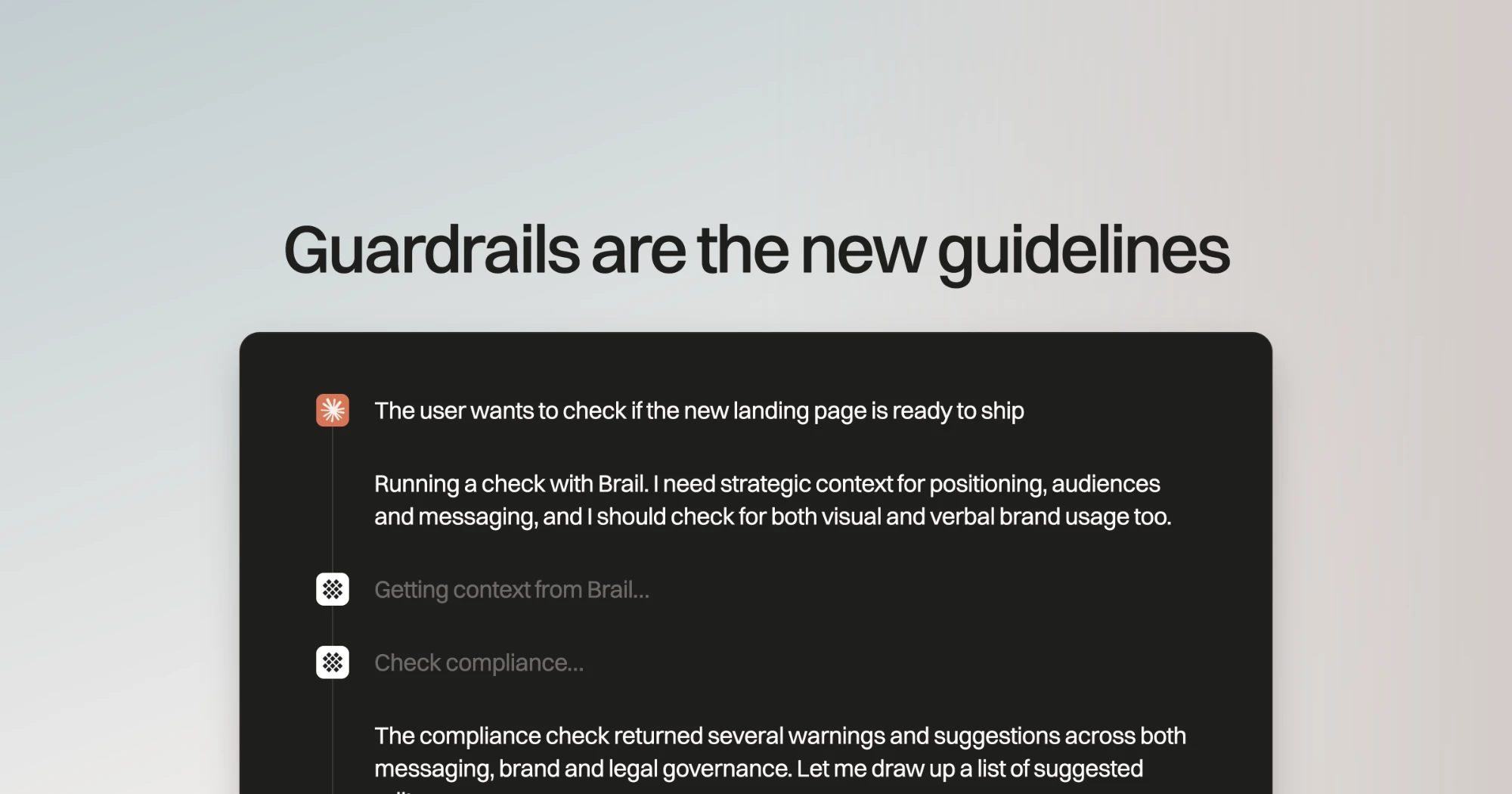
A guideline was written for people with taste, and more of its readers are now agents. Guardrails sit in the work itself, and they're made from exactly what agencies are good at.
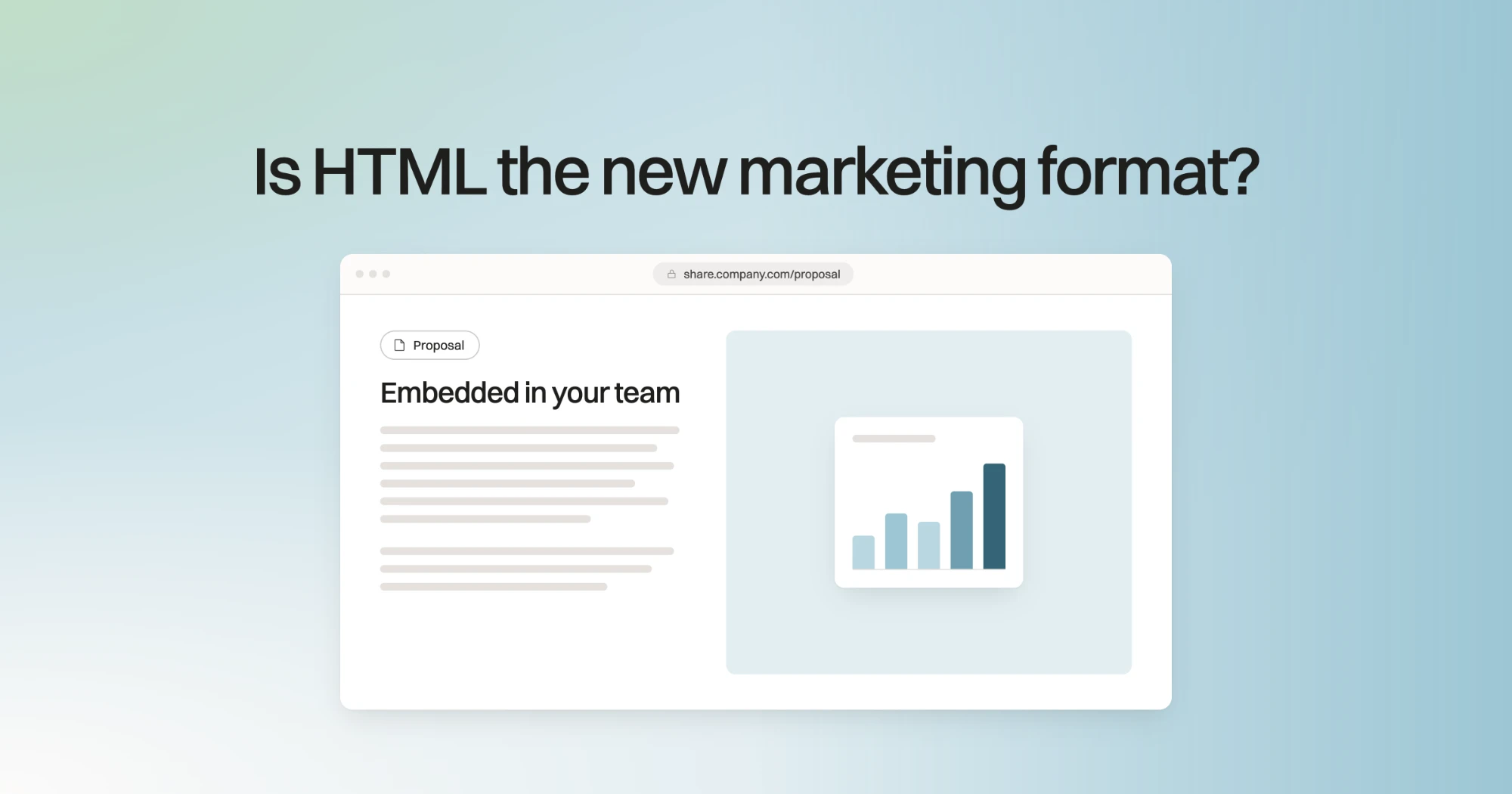
The sales presentation goes out as a link and the proposal is a page the client scrolls through. It might be the biggest change to marketing formats since everything moved to digital.