Brand is the new moat
As AI makes what a company does harder to defend, good companies will be chosen for who they are, not just what they deliver. Our thoughts on how brand is quickly becoming the new moat.
The sales presentation goes out as a link and the proposal is a page the client scrolls through. It might be the biggest change to marketing formats since everything moved to digital.
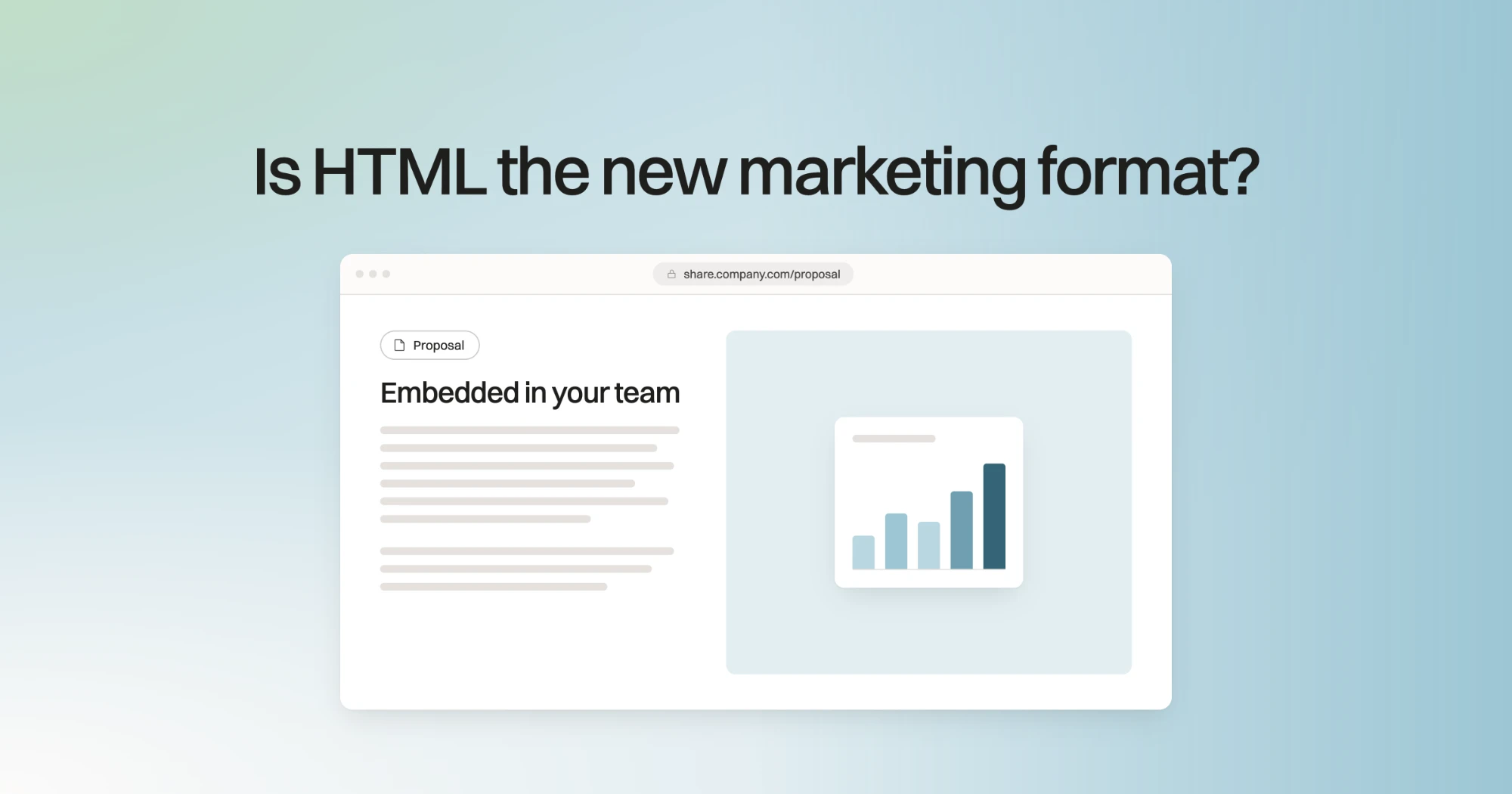
Over the last year or so, a quiet change has been happening in a lot of marketing teams. The sales presentation goes out as a link, and the proposal is a page the client scrolls through. The quarterly customer report and the slides presented internally (or externally) aren't Keynote files anymore either. Slides and PDFs are still around, but more and more as something people export when someone asks for them. It's the same for us at Brail. We haven't opened Keynote, or even Figma, for months.
In many teams nobody really announced it. People started asking AI for their first drafts, noticed that pages came back better than slides did, and kept going. But a lot of the companies and customers we've talked to have now taken it a step further and made it an actual business decision, so HTML is the format they produce in, whatever the piece is. We think that's worth looking at on purpose, because it might be the biggest change to marketing formats since everything moved to digital in the first place.
Part of it is simply that AI is good at it. The web is written in HTML, and the models have read more of it than almost anything else, so asking for a page tends to get you real layout, proper type and a sensible structure. Asking for the same presentation as a PowerPoint file is still a bit like asking someone to paint with gloves on.
There's a longer story underneath. Formats like PDF and PowerPoint were built around paper and projectors, for a fixed page that looked the same everywhere. Most marketing output is now read on a screen, often a phone, by someone who got a link in an email or a chat. A page was always the more natural fit for that, it just used to take a developer to make one. Once anyone in marketing or sales can make one in a few minutes, that barrier mostly goes away.
A page can also move, which a slide or a PDF never really could. A chart can build itself as the reader scrolls, a product walkthrough can play right inside the proposal, and a diagram can show how something works one step at a time. That kind of motion used to mean a motion designer, an agency or a video file nobody could edit afterwards. In a page, AI can add it in a few minutes and change it again tomorrow, so it starts to show up in everyday work like a sales presentation, and not only in the launch video.
It also fits how marketing teams already work. The website is HTML, emails are HTML, and the product often is too. Bringing decks, proposals and reports into the same format means one way of making things across the whole funnel, and the brand in HTML can be the same brand everywhere, from the homepage to the follow-up after a demo.
We think a few things follow from it, though we're still watching how fast they'll happen.
The first is that it gets much easier to make something for one reader. A page keeps the words, the pictures and the design apart, so changing the industry, the case study or a whole section for a single client doesn't break anything, and AI is a lot better at editing a page than at editing slides. A proposal for each client and a presentation for each lead stop being a luxury and become how it's normally done. Reusing gets easier too, as long as the team builds from shared pieces. A case card, a pricing table or a product walkthrough can be made once and dropped into any page, and it looks right wherever it lands. Most of the interesting work then moves from making each piece to deciding what each reader should see, and which pieces are worth making once and using everywhere.
Pieces also stop being finished in the old sense. A page can be updated after it's sent, so the pricing, the case study or the product screenshots can stay current in everything that's already out there. Marketing starts to look a bit more like running a product and a bit less like shipping a campaign and moving on.
The brand moves into the format, too. In slides, the brand was a template and a guideline that people tried to follow. With pages, the colours, type and spacing can be set once in a shared starting point for each kind of page (often called an HTML shell), so whatever gets built from it already looks right. That makes on-brand output the easy default, as long as someone owns those shells and keeps them current.
And over time we think slides and PDFs become something you export now and then, a bit like printing something today. Most offices still have a printer somewhere, and it gets used for the contract that needs a signature or the board pack someone wants on paper. Slides will probably end up in the same corner, handy when someone asks for them, and less and less the place where the work starts.
As AI makes what a company does harder to defend, good companies will be chosen for who they are, not just what they deliver. Our thoughts on how brand is quickly becoming the new moat.
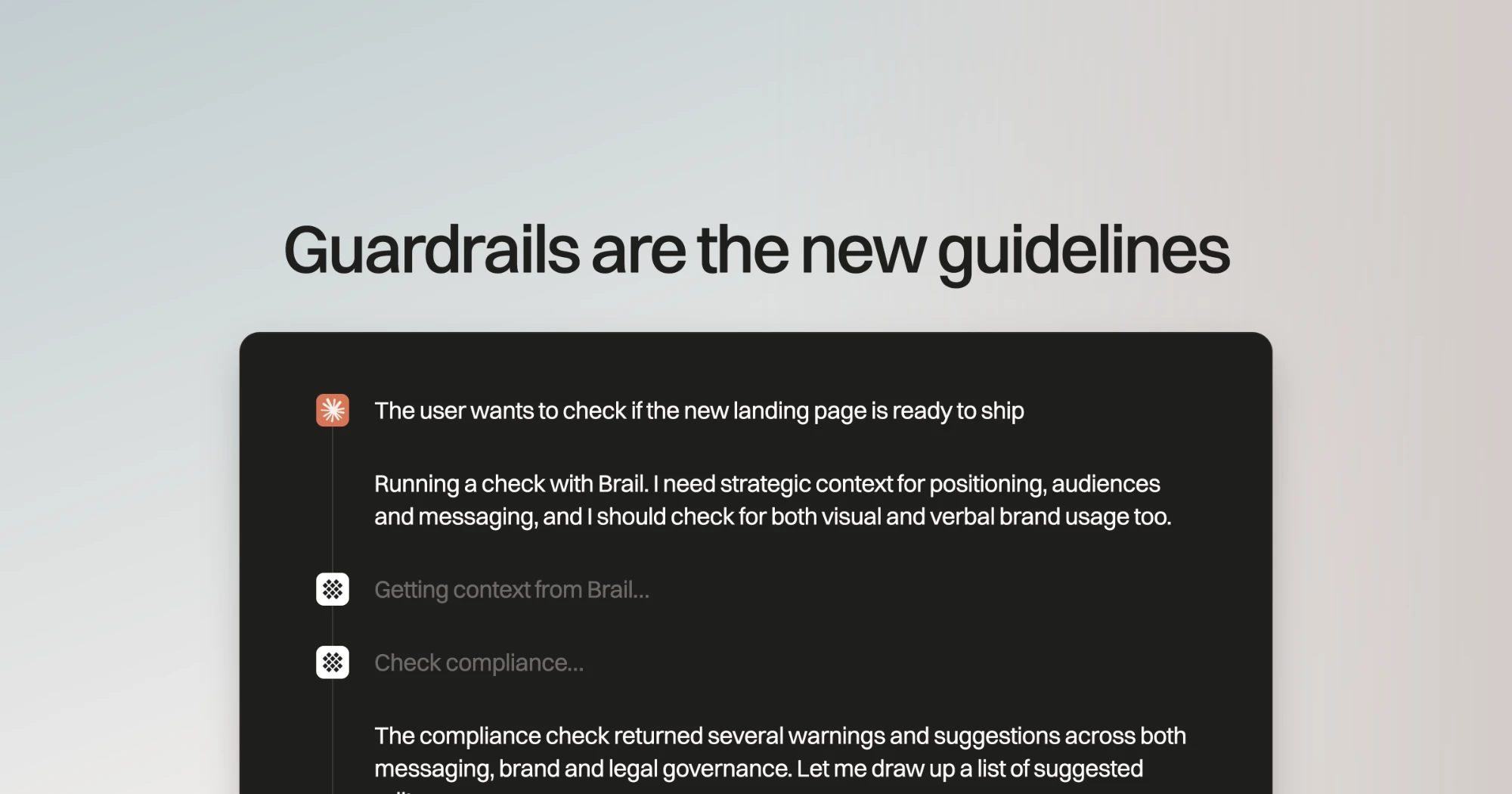
A guideline was written for people with taste, and more of its readers are now agents. Guardrails sit in the work itself, and they're made from exactly what agencies are good at.