Brand is the new moat
As AI makes what a company does harder to defend, good companies will be chosen for who they are, not just what they deliver. Our thoughts on how brand is quickly becoming the new moat.
A guideline was written for people with taste, and more of its readers are now agents. Guardrails sit in the work itself, and they're made from exactly what agencies are good at.
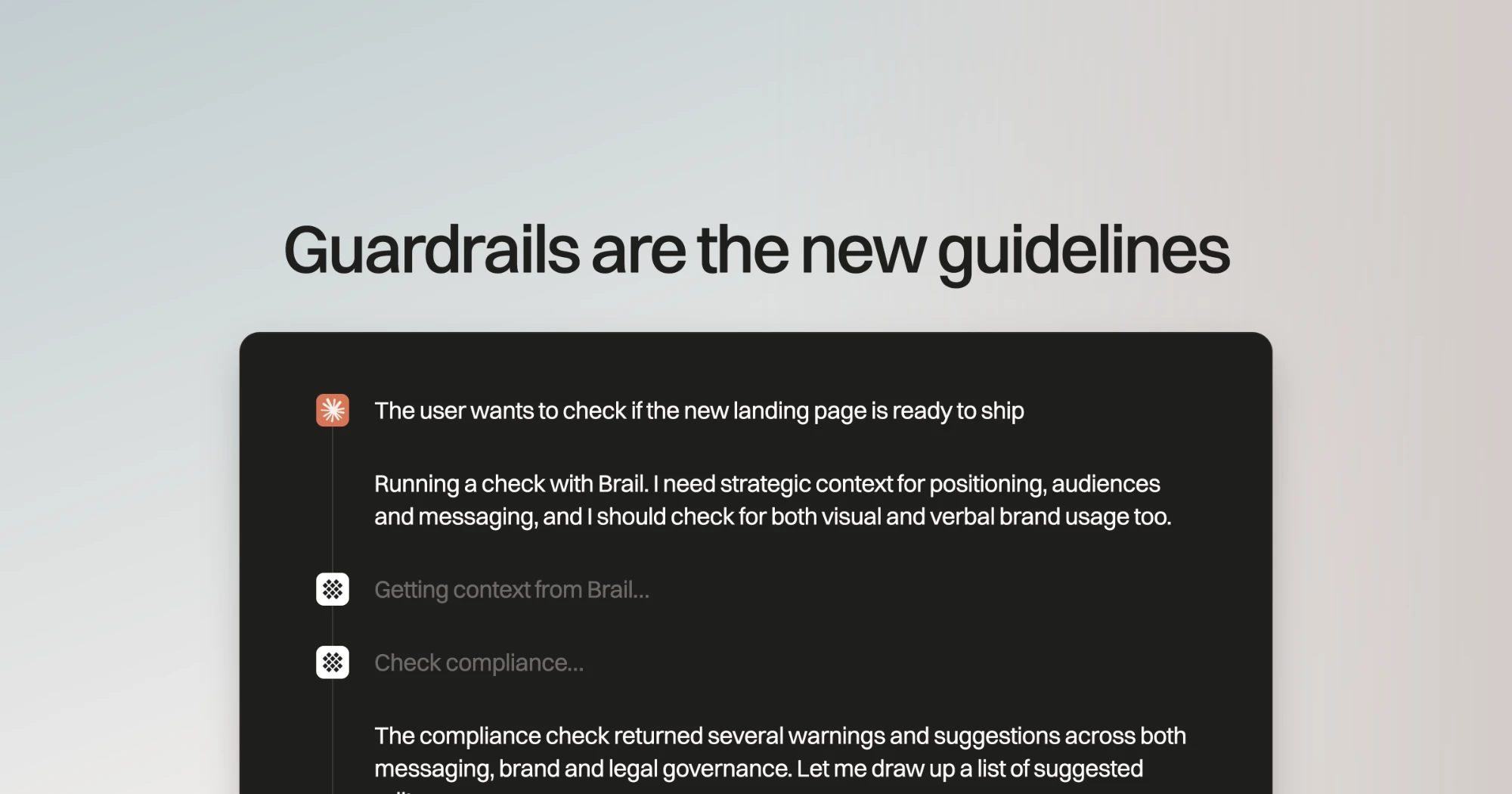
Most brand projects end the same way. After months of strategy, design and back and forth, there's a launch, a well-made guideline and a handover meeting where everyone is quite proud of the work. Then the brand leaves the studio and starts living inside the client's company, and the agency mostly hears about it again at the next pitch.
That used to be fine, because the people making things on the client's side were designers, writers and a couple of external partners who actually read the guideline. They knew what the work was meant to feel like and could make a judgement when the guideline didn't cover something.
By now a lot of what the client makes is drafted by AI, often by people outside marketing and sometimes by agents running on their own. The guideline is still there, and it's probably still good. It just has fewer human readers than it used to, and the new readers aren't very good at reading it.
A guideline was written for people with taste. It describes the brand, explains the thinking and shows a handful of examples, and it trusts the reader to fill in the gaps. An agent doesn't really fill gaps the same way. Give it the whole document and it treats page four and page forty as equally important, or it picks up the colours and the tone of voice and misses everything that made the brand feel like itself.
So the client gets output that's roughly right, at a volume nobody can review. A few months in, the brand people see in the client's posts, decks and proposals has drifted a fair bit from the one that was launched. Nobody did anything wrong, really. The brand just didn't come with anything that held it in place.
A guardrail is the part of the brand that sits in the work itself instead of beside it. In practice it's usually a few quite concrete things.
The best examples, chosen per situation, so the sales deck learns from the best sales decks and the social post from the best posts. Ready-made starting points for the things the client makes most often (often called HTML shells), so the layout, type and colours are right before anyone writes a word. And an agreed bar for how much variation is fine in each channel, which every piece is checked against before it goes out.
That last part is probably the biggest change. A guideline could only hope the work turned out well, while guardrails make it possible to actually check. Before something ships, it can be looked at for whether the design holds up, whether the messaging is the current one for that audience, whether the writing sounds like the brand, and whether the claims, names and legal lines are allowed. The client knows that what went out was actually good, and the agency gets something it rarely had before, a way of seeing whether the brand it built is still holding up in the work.
None of this replaces the guideline. The thinking still has to happen somewhere, and the guideline is where it's written down. But the guardrails are what the client's people and agents actually touch every day, so they're where the agency's craft either survives or slowly gets averaged out.
If you think about it, guardrails are made from exactly what agencies are good at. Choosing which work is the best example is a matter of taste. Building the shell for a client's proposal is design. Deciding how far a LinkedIn post can drift before it stops feeling like the brand is the kind of judgement clients hire an agency for in the first place.
What changes is mostly the shape of the deliverable and how long it lasts. A guideline gets finished and handed over. Guardrails are never quite done, because the client launches new things, the market answers back and the best examples keep changing. Someone has to choose the new examples, adjust the bar and update the shells when the brand moves, and the agency that built them is usually the one who knows best how.
That puts the agency in a different place in the relationship. It's less the studio that made the brand two years ago and more the one keeping it in shape week to week, while the client's team and its agents do most of the producing. For a lot of agencies, we think that's a more natural role than it sounds, and probably a longer one.
The guideline will most likely still be made, and it'll still be one of the most visually inspiring things in a client's marketing stack. It's just no longer the last thing the agency hands over.
As AI makes what a company does harder to defend, good companies will be chosen for who they are, not just what they deliver. Our thoughts on how brand is quickly becoming the new moat.
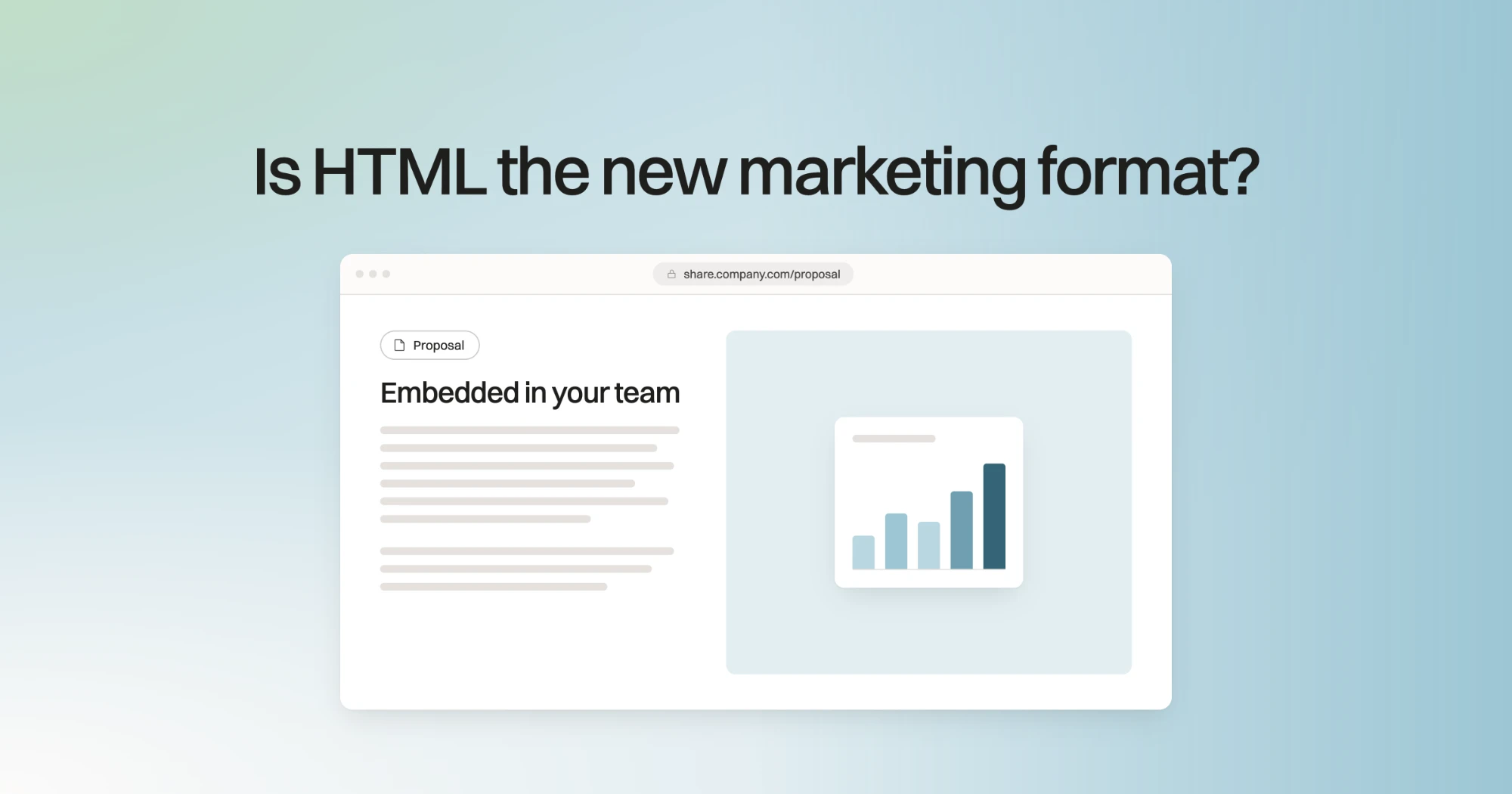
The sales presentation goes out as a link and the proposal is a page the client scrolls through. It might be the biggest change to marketing formats since everything moved to digital.