Brand is the new moat
As AI makes what a company does harder to defend, good companies will be chosen for who they are, not just what they deliver. Our thoughts on how brand is quickly becoming the new moat.
Customers rarely read your brand guideline, so the brand they meet is the proposals, replies and follow-ups your team and its agents send each week.
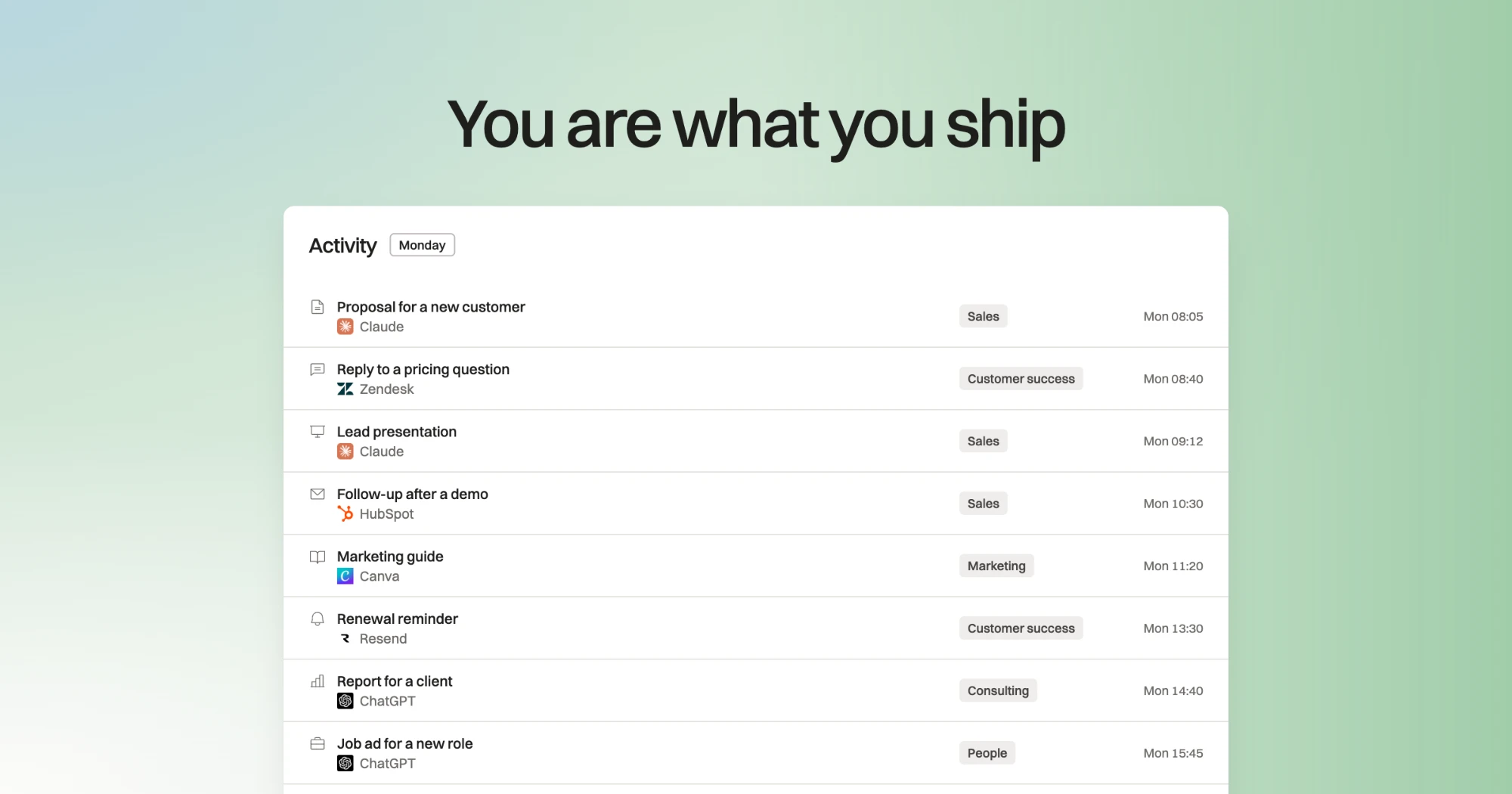
If you think about the last piece of software your team bought, you probably remember a handful of small things. Maybe it was the proposal that arrived the morning after the first call, or the reply you got when you asked an awkward question about pricing. You almost certainly never saw their brand guideline, and you didn't need to.
From the outside, a company is mostly the few things that reached you and how they felt. We think that has always been true, but it used to be easier to live with. Most of what went out passed through a small group of people in marketing, so the brand they'd written down and the work that left the building stayed fairly close to each other.
By now a lot more leaves the building, and from many more places. Sellers put their own decks together with AI, customer success writes its own reports, and agents send follow-ups on a schedule. All of it carries the company's name, even though nobody set out to call it brand work.
A brand guideline is where a company writes down who it means to be, and in last week's output you can see who it actually was. Both are useful, and we don't think the guideline has stopped mattering. It's just that customers only ever meet the second one.
They also don't weigh things the way we do internally. The campaign film might have taken a quarter and the renewal reminder took an agent a few seconds, but the customer reads the reminder more carefully, because it's about their money (and it's often the one nobody looked at).
So we've started to think of a brand as something that mostly happens in small situations. It's in how a company says no to a discount, how it answers when a customer is confused, or what the job ad promises. Those moments are small and nobody really designed them, and more and more of them are now written by an agent.
A simple way to see this for your own company is to collect what went out in one ordinary week and read it the way a stranger would. Ask each team for five things they sent to someone outside the company. It could be a proposal, a support reply, a follow-up after a demo, a job ad, or whatever the agent posted on Thursday. Put them on one page, without saying who made what.
Then read it from top to bottom and ask what kind of company made all of this. Does it sound like one company or several? Which pieces would you happily let a prospect judge you on, and which would you rather they hadn't seen? We don't know what you'll find, but our guess is that most of the surprises come from outside marketing, and that a few of them are pleasant ones.
The pieces you liked are worth keeping. You'd probably learn more about the brand from three or four pieces you'd happily show anyone than from the document, and they're a good thing to hand to whoever (or whatever) makes the next one. An agent picks up more from a good example than from a rule, we think, and the same is probably true for a new colleague.
If the brand is what ships, then a lot of brand work naturally moves closer to the moment something gets made. It's worth asking what a seller or an agent has in front of them when they start on that proposal, and whether it includes the current pitch and a good example for this kind of customer.
It also means agreeing beforehand on how much variation is fine. A support reply shouldn't read like a campaign, and two sellers will never write the same email, so most teams need some room. But someone should have decided where the edges are, and that standard needs a way of being rolled out across the company. If it isn't, who you are to your ideal customers could be radically different in 2 months.
As AI makes what a company does harder to defend, good companies will be chosen for who they are, not just what they deliver. Our thoughts on how brand is quickly becoming the new moat.
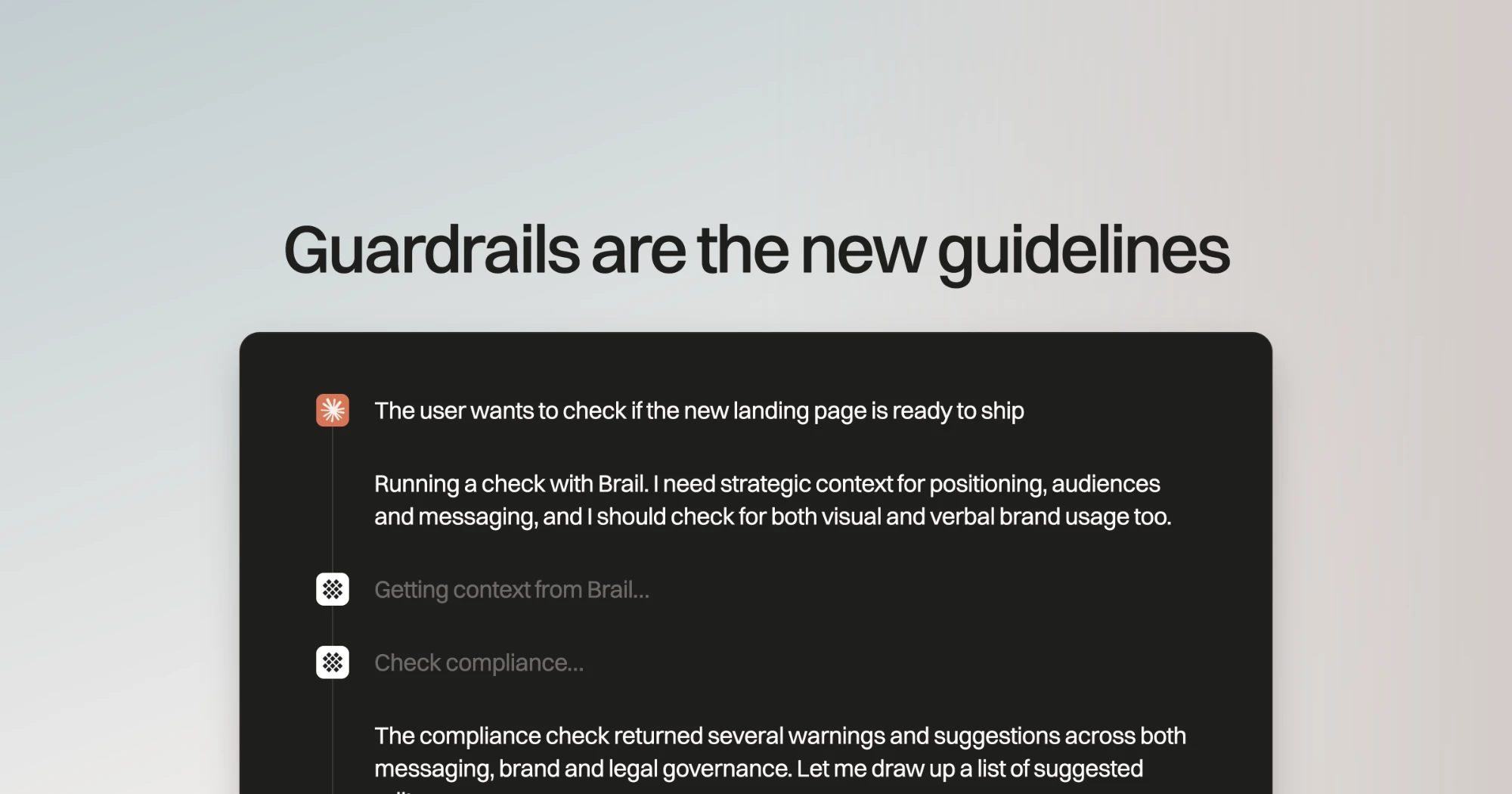
A guideline was written for people with taste, and more of its readers are now agents. Guardrails sit in the work itself, and they're made from exactly what agencies are good at.